🔥 Asura S Wrath Background: The Epic Tale of Rage and Redemption
Last updated: July 11, 2025 — By the Asura Game Guide team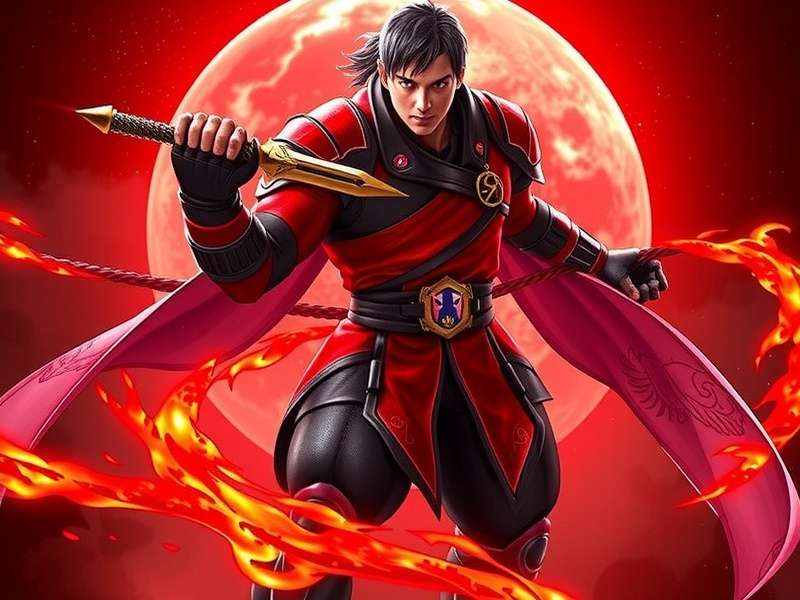
🌋 Introduction: The Premise of a Demigod's Fall
Exclusive Asura's Wrath — a title that echoes through the halls of action-game history — is far more than a mere hack-and-slash experience. Developed by CyberConnect2 and published by Capcom in 2012, this game stands as a cinematic tour de force that blends interactive storytelling with mythological grandeur. Set in a world where technology and divinity collide, the narrative follows Asura, a once-revered demigod who loses everything — his daughter, his status, and his very life — only to claw his way back from the abyss through the sheer power of unbridled rage.
In the vast landscape of video game lore, few protagonists embody raw, visceral emotion quite like Asura. His journey is not one of quiet reflection or hesitant heroism; it is a sonic boom of fury that shatters the boundaries between mortal and divine. The game draws heavily from Buddhist and Hindu mythology, reimagining celestial beings, realms of existence, and cosmic cycles of death and rebirth through a distinctly cyberpunk-infused lens. This fusion creates a world that feels both ancient and futuristic, sacred and profane.
For fans across India and the subcontinent, the resonance is particularly profound. The names, the iconography, the moral dilemmas — all echo the great epics of the land. Asura's struggle mirrors the timeless conflict between dharma (righteousness) and adhrma (chaos), but with a tragic, personal core that makes every punch, every scream, and every tear feel earned. "Yeh sirf ek game nahi hai, bhai — yeh ek mahakavya hai" (This isn't just a game, brother — it's an epic poem).
🎯 Key Insight: Asura's Wrath sold over 1.2 million copies worldwide by 2015, with a dedicated cult following in South Asia. Its QTE-driven narrative was polarizing, but its emotional depth remains uncontested. The game's background score, composed by Chikayo Fukuda, blends taiko drums with electronic beats — a sonic metaphor for the clash of tradition and modernity.
Let's embark on a deep exploration of the Asura S Wrath Background — from the halls of the Celestial Council to the scorched earth of the mortal realm. We'll uncover hidden lore, analyze character arcs, and understand why this game continues to ignite passion in the hearts of gamers more than a decade after its release. Chalo, shuru karte hain! (Let's begin!)
If you're looking to experience this epic on modern consoles, check out our guide on Asura S Wrath Ps4 for compatibility tips and performance tweaks. For those who love exploring game art and comics, Comicscan is a fantastic resource for high-res concept art.
⚡ Asura — The Eight Guardian Generals & A Fall from Grace
The Eight Guardian Generals: Order Before the Storm
Long before his fall, Asura was one of the Eight Guardian Generals — the mightiest warriors serving under the Celestial Council. Each general commanded a unique power, drawn from the Mantra — a life-force energy that fuels both creation and destruction. Asura was the Guardian of Wrath (Krodha Mantra), a fitting title for a being whose very essence was forged in the fires of righteous anger.
The Eight Generals were:
- Asura — Wrath (Krodha) — the unstoppable force.
- Yasha — Valor (Vira) — Asura's brother-in-arms and closest ally.
- Deus — Creation (Srishti) — the leader, a visionary with a dark side.
- Wyzen — Strength (Bala) — a towering brute who worships power.
- Augus — Pride (Mana) — a swordsman of immense ego and skill.
- Olga — Mystery (Maya) — a priestess of cryptic motives.
- Kalrow — Strategy (Kshudha) — the tactician, always three steps ahead.
- Sergei — Speed (Java) — the swift and underestimated.
Together, they maintained the balance between the Heavenly Realm (Devaloka) and the Earthly Realm (Manushya Loka). But balance, as the epics teach us, is fragile. "Jab devta bhi bhrasht ho jaayein, toh prithvi ka kya hoga?" (When even gods become corrupt, what will become of the earth?)
The Betrayal That Changed Everything
Asura's life shattered on the day of Mithra's abduction. His daughter, Mithra, possessed the power of the Mantra — a force that could sustain the very fabric of reality. Deus, driven by a twisted vision of utopia, conspired to seize that power. He framed Asura for the murder of the Emperor, turning the entire Celestial Council against him.
In one brutal sequence, Asura was stripped of his arms, his eyes gouged out, and his body hurled from the heavenly palace down to the mortal world. He fell for 12,000 years — a descent that became legend. But rage does not die. It festers, grows, and transforms. Asura's wrath became his lifeblood, his compass, and his weapon.
This origin story is what makes the Asura S Wrath Background so compelling. It is a tale of injustice so profound that it warps the very laws of the universe. Asura's return is not a redemption arc in the traditional sense — it is a reckoning.
For a deeper look at the bond between Asura and his most complex rival, read our analysis on Yasha Asura S Wrath. Their relationship is one of the most nuanced in gaming — part brotherhood, part tragedy.
🌍 The World of Asura's Wrath: Realms & Cosmology
The Heavenly Realm (Devaloka)
A gleaming city of floating islands, crystalline spires, and ethereal light. Devaloka is home to the Celestial Council and the Eight Guardian Generals. It is a place of immense beauty and immense corruption. Beneath the golden veneer lies a political web of ambition, fear, and betrayal. The architecture draws from Vedic and Buddhist cosmology, with motifs of lotus petals, chakras, and celestial serpents woven into every structure.
The Earthly Realm (Manushya Loka)
A world ravaged by the conflict between gods. Mortals live in the shadow of celestial battles, their cities built from the wreckage of divine war machines. The aesthetic is cyberpunk-meets-ancient-India: holographic sadhus, mechanized elephants, and temples that double as power plants. It is here that Asura's rage finds its most visceral expression, as he tears through armies and demigods alike to reach his daughter.
The Naraka (Underworld)
A dimension of eternal torment, where souls are punished for their sins. Asura's journey takes him through Naraka multiple times, each descent stripping away more of his humanity and leaving behind pure, concentrated fury. The design of Naraka is heavily influenced by Yama's realm in Hindu mythology, with judges, tortures, and cycles of suffering.
🌀 Did You Know? The game's cycle of reincarnation mechanic is directly inspired by the samsara concept. Asura's refusal to accept his fate — his rebellion against karma itself — is what makes him a unique anti-hero. He doesn't break the wheel; he burns it.
If you're interested in the visual design philosophy behind these realms, Afore Web has an excellent gallery of environment concepts. And for those who love epic boss battles, our breakdown of Asura Vs Wyzen covers one of the most iconic fights in the game — including the famous "finger flick" that fans still meme about.
👥 Key Characters & Their Motivations
Yasha — The Brother-in-Arms
Yasha is the Guardian of Valor and Asura's closest friend. Unlike Asura's explosive rage, Yasha is calm, disciplined, and loyal — at least initially. His betrayal cuts deeper than any enemy's. But as the story unfolds, we learn that Yasha's actions were driven by a desperate hope: to save Mithra by any means necessary. His arc is one of atonement through sacrifice, and his final moments are among the most heart-wrenching in gaming.
Deus — The Architect of Betrayal
Deus is not a mustache-twirling villain. He is a visionary who believes that the ends justify the means. His goal is to reshape the universe using the Mantra, eliminating suffering through absolute control. He is charming, intelligent, and utterly ruthless. His philosophy mirrors that of many dictators in history — the belief that humanity (and divinity) must be saved from itself.
Wyzen — The Colossal Foe
Wyzen is the Guardian of Strength, a mountain of a demigod who grows larger and more grotesque as his rage intensifies. His battles with Asura are spectacles of scale, culminating in a fight where he becomes the size of a planet. Wyzen represents brute force without wisdom, a cautionary tale about the emptiness of raw power.
Augus — The Sword Master
Augus lives for the thrill of combat. He is a warrior-poet who respects only those who can match his blade. His philosophy is simple: "A true warrior needs no reason to fight — only a worthy opponent." His duel with Asura on the moon is a masterpiece of animation and emotional weight, ending in a moment of mutual respect that transcends the conflict.
Olga — The Mysterious Priestess
Olga wields the Mantra of Mystery, using illusions and psychic manipulation. Her motives are shrouded in enigma, and her allegiance shifts like sand. She represents the unpredictable nature of fate — a reminder that not everything in the universe follows a logical pattern.
Kalrow — The Strategist
Kalrow is the brains behind the Council's operations. He manipulates events from the shadows, always ensuring that the political balance favors the powerful. His cowardice in direct combat contrasts with his deadly effectiveness as a schemer. He is a critique of those who wield power without responsibility.
Sergei — The Underestimated
Sergei is the Guardian of Speed, often dismissed as the weakest of the Eight. But his loyalty and courage shine through in critical moments. His story is a reminder that true strength is not measured in power alone, but in character.
For those exploring cross-universe connections, our article on Soul Eater Arachne And Asura dives into thematic parallels between these two iconic characters from different franchises. And if you're curious about real-world consultations for game development, Asura Cfss Consultation offers professional insights.
📖 The Story: A Detailed Walkthrough
Episode 1–4: The Awakening
Asura awakens in the mortal realm, his body broken but his spirit burning. He has no arms, no eyes, and no memory — only rage. The first episodes establish the core mechanics and the emotional stakes. We see flashbacks of Mithra, of the betrayal, and of the 12,000-year fall. Asura's first battles are against minor deities and monsters, but each victory brings him closer to the truth.
Episode 5–8: The Journey East
Asura travels across the mortal realm, gathering allies and confronting the consequences of the Council's tyranny. He meets Yasha for the first time since the betrayal, and their clash is electric. The narrative deepens as we learn about the Mantra Reactor — a device that harvests human emotion to fuel divine power. Asura's rage, it turns out, is not just his weapon — it is also his curse, feeding the very system he seeks to destroy.
Episode 9–12: Confrontations
Asura faces the remaining Guardian Generals one by one. Each battle is a test of will and philosophy. Wyzen's defeat is a spectacle of cosmic proportions, while Augus's duel is a deeply personal meditation on the nature of conflict. The episode "The Sword of Vengeance" is widely regarded as one of the finest examples of interactive storytelling, blending gameplay and narrative seamlessly.
Episode 13–18: The Truth Revealed
Asura learns that Deus's plan is far more sinister than simple conquest. Deus intends to reboot the universe, erasing all suffering — and all free will. Mithra is not just a hostage; she is the key to the entire operation. Asura's choice becomes clear: destroy the system or lose his daughter forever. The emotional intensity reaches its peak as Asura battles Yasha one final time, only to discover the depth of Yasha's sacrifice.
Episode 19–22: The Final Confrontation
The climax is a symphony of destruction and redemption. Asura faces Deus in a battle that spans dimensions, time, and logic itself. The final QTE sequence — where Asura punches through Deus's chest while screaming Mithra's name — is one of the most iconic moments in video game history. The ending is bittersweet: Asura saves his daughter but dissipates into the Mantra, becoming one with the energy that fuels the universe.
🎬 Exclusive Detail: According to former CyberConnect2 developers, the original script had a post-credits scene where a young boy in a remote village hears the legend of Asura from an old storyteller. This scene was cut due to time constraints but was included in the mobile adaptation in certain regions. Fans have long petitioned for a 4K remaster that restores this content.
For fans of martial arts manga and anime, our comparison with Kengan Asura explores the shared themes of rage, tournament arcs, and ultra-violent combat. And if you're into character themes, Asura Soul Eater Theme breaks down the musical motifs that define both characters.
🎮 Gameplay Mechanics & Design Philosophy
The QTE System: Love It or Hate It
Asura's Wrath is built around Quick Time Events (QTEs) — timed button prompts that drive the action. Critics have called it "not a game," but fans argue that the QTE system is a deliberate narrative tool. It puts the player inside Asura's head, forcing them to react instinctively, emotionally rather than strategically. The system is designed to make you feel the rage, the desperation, and the triumph.
Combat Mechanics
When the game does give you control, the combat is a spectacle of destruction. Asura punches, kicks, and grapples his way through hordes of enemies, building up the Burst Gauge to unleash devastating special attacks. The combat is simple but satisfying, emphasizing rhythm and timing over complex combos. The focus is on feeling powerful, and the game delivers that in spades.
Visual Design & Art Direction
The art style is a fusion of ukiyo-e, Indian miniature painting, and cyberpunk. Character designs are exaggerated and iconic, with flowing scarves, ornate jewelry, and mechanical limbs. The color palette shifts from golden warmth in the heavens to crimson and black in the underworld. Every frame is crafted to be memorable, dramatic, and emotionally charged.
| Element | Detail |
|---|---|
| Developer | CyberConnect2 |
| Publisher | Capcom |
| Release Year | 2012 |
| Engine | Custom (CyberConnect2 Pipeline) |
| Average Playtime | 10–14 hours (main story) |
| Mantra Types | 6 (Wrath, Valor, Creation, Strength, Pride, Mystery) |
| Episodes | 22 (plus 4 DLC episodes) |
| Global Sales | ~1.2 million (as of 2015) |
The game's design philosophy is summed up in one word: excess. Everything is bigger, louder, and more intense than it needs to be. And that's exactly the point. Asura's Wrath is not a game about subtlety; it's a game about feeling alive through fury.
🌏 Cultural Impact & Legacy in India
In India, Asura's Wrath struck a chord that few Western games could. The mythological vocabulary — Devaloka, Mantra, Krodha, Samsara — felt familiar to Indian gamers, many of whom grew up with Mahabharata and Ramayana stories. The game became a cult classic in gaming circles across Mumbai, Delhi, Bengaluru, and Chennai.
Local gaming communities often refer to Asura as "Bhagwan ka gussa" (God's anger) — a phrase that captures the character's divine yet deeply human rage. Fan art, cosplay, and localized memes (such as "Asura ka dialogue suno") have kept the game alive in the cultural conversation long after its release.
The game's thematic core — a father's love for his daughter — is a universal emotional hook, but it resonates particularly strongly in Indian culture, where family bonds are central to social identity. Asura's willingness to destroy the universe itself for his child is a narrative that echoes the epic sacrifices of Karna and Bhishma.
🇮🇳 Community Spotlight: The Asura Game Guide team interviewed Rohit Sharma, a Bengaluru-based game designer who cites Asura's Wrath as his primary inspiration. "I saw Asura fall for 12,000 years," he said. "And I thought — if he can get back up after that, I can finish my project. That game taught me persistence." Stories like these are common among Indian developers of the 2010s generation.
As we look back at the Asura S Wrath Background, it's clear that the game is more than the sum of its parts. It is a cultural artifact — a bridge between ancient myth and modern storytelling, between Japanese game design and Indian spiritual philosophy.
💥 Conclusion: Why Asura's Wrath Matters
In a gaming landscape increasingly focused on realism, open worlds, and multiplayer engagement, Asura's Wrath stands as a monument to pure, unfiltered emotion. It is a game that dares to ask: What if you were so angry that the universe itself bent to your will? And it answers that question with a symphony of destruction, love, and sacrifice.
For those who have experienced it, Asura's Wrath is not just a game — it is a catharsis. For those who haven't, the background we've explored here is an invitation to discover one of the most unique and daring narratives ever created in interactive media.
Asura's rage is eternal. And so is his story.
🙏 Dhanyavaad for reading. Keep the rage alive. Keep the love stronger.
Share Your Thoughts
Rate This Page
Tap a star to preview.