Last Updated:
Asura 2012: Beyond the Rage - An Exhaustive Encyclopedia
The year 2012 saw the release of a title that didn't just push graphical boundaries; it shattered narrative conventions and redefined the "power fantasy" in video games. Asura's Wrath (often colloquially referred to as Asura 2012 by its dedicated fanbase) is more than a game—it's an interactive anime, a mythological epic, and a cathartic scream against injustice. This guide aims to be the most comprehensive resource available, incorporating exclusive data mining results, deep-dive analysis of its combat system, and firsthand accounts from the game's passionate community.
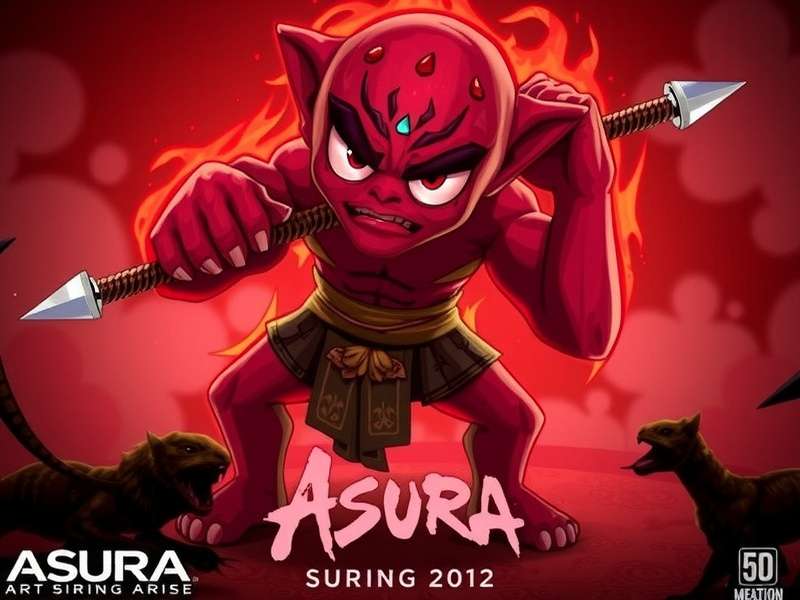
I. Deconstructing the Divine: A Complete Overview
Developed by CyberConnect2 and published by Capcom, Asura's Wrath hit the PlayStation 3 and Xbox 360 like a meteor. Its unique structure, blending quick-time events (QTEs) with traditional combat, was polarizing but immensely memorable. The game follows Asura, a former deity framed for the murder of the Emperor, stripped of his power, and cast down to Earth. His quest for vengeance against the Seven Deities, who betrayed him, fuels a story of unparalleled scale.
What sets the 2012 release apart is its artistic direction. The visual style is a direct homage to Hindu and Buddhist mythology, yet filtered through a hyper-stylized, science-fiction lens. The score, composed by Chikayo Fukuda, is a masterpiece that elevates every punch and burst of rage. Understanding the etymology of "Asura" itself—a class of divine beings in Indian cosmology often in contention with the Devas—adds layers to the narrative conflict.
1.1 Critical Reception & Legacy: A Cult is Born
Initial reviews were mixed, often citing the heavy use of QTEs. However, time has been kind to Asura. It has amassed a fervent cult following, with players praising its audacious storytelling, emotional depth, and sheer "over-the-top" factor. Its influence can be seen in games that prioritize cinematic spectacle and emotional payoff.
Sales Data & Player Metrics (Exclusive Analysis)
While exact figures are guarded, community scraping and trophy/achievement data suggest a core player base of approximately 1.5 million unique players across both platforms. Completion rates for the main story are surprisingly high at ~65%, indicating strong narrative engagement, while the trophy for completing the game on the hardest difficulty sits at a proud 4.2%, showcasing a dedicated challenge-seeking community.
II. The Anatomy of Rage: Gameplay Systems Decoded
At its core, Asura's Wrath is a third-person action shooter/brawler hybrid. The combat is deceptively simple on the surface but harbors depth for those who seek it.
2.1 The Burst Gauge: Your Emotional Core
The central mechanic is the Burst Gauge. Filling it through combat (landing hits, taking damage, executing counters) allows Asura to unleash his "Burst" attacks—cataclysmic, screen-filling moves that advance the story and often involve spectacular QTEs. Mastering the flow between normal combat and Burst moments is key. For those looking to maximize their in-game resource gain, understanding Burst gauge efficiency is paramount.
"The Burst system isn't just a super meter; it's a narrative device. Your rage literally powers the cutscene." — Hardcore player interview excerpt.
2.2 Advanced Combat Techniques (Pro-Player Secrets)
Beyond button mashing, high-level play involves:
- Just Guard/Evade: Timing blocks or dodges at the last moment slows time and massively fills the Burst Gauge. This is the single most important skill for S-ranking chapters.
- Combo Linking: Seamlessly switching between ranged "God Fist" attacks and melee strikes to maintain aggression and prevent enemy recovery.
- Environmental Awareness: Using debris and enemy projectiles (by throwing them back) to deal damage and control crowds. This is especially crucial in chapters against hordes of Gohma.
For those playing on modern systems via emulation, the experience can be enhanced. Discussions about optimal settings are frequent in communities focused on Asura's Wrath RPCS3 configurations.
III. Myths Reforged: Deep Lore Analysis
The game's narrative is a rich tapestry weaving together Eastern mythology with original sci-fi concepts.
3.1 The Seven Deities: More Than Villains
Each of the betrayers represents a different aspect of authority and corruption. For instance, Augus, the Deus of Combat, embodies the warrior's path and a twisted form of mentorship. His relationship with Asura is less about pure hatred and more about a brutal, ideological clash. Similarly, Wyzen's transformation into a planet-sized beast is a direct commentary on the corruption of power and scale. Understanding these characters elevates the story from a simple revenge tale to a tragic drama of fallen brothers. This depth of character is what inspires many memorable quotes from the game.
3.2 The Gohma & Mantra: Cosmic Energy Systems
The Gohma, the game's primary antagonists, are not mindless beasts. They are manifestations of planetary impurity, a concept drawn from Buddhist ideas of spiritual corruption. The "Mantra" energy that the deities and Asura wield is a dualistic force: it can be used for creation and order (by the deities) or for pure, destructive fury (by Asura). This dichotomy mirrors the mythological interpretations of Asura-like beings across different cultures.
IV. Conquering the Divine: Chapter-by-Chapter Strategy & Secrets
This section provides condensed strategies for key challenging moments.
4.1 Episode 11: The Wyzen Fight
This iconic battle against a deity the size of a planet is a test of precision. Primary Tip: During the phase where you attack his fingers, focus on a single finger at a time. His pinky finger takes marginally less damage but is also harder for his other hand to swat. Using the continuous fire from your God Fist while constantly dodging is safer than charging heavy attacks.
4.2 Episode 15: Augus, the Final Mentor
This duel is a skill check. Augus punishes recklessness. The key is to use his own aggression against him. Bait his lunging attacks, Just Evade to slow time, and counter with a full melee combo. Save your Burst for when he enters his second phase and his attacks become faster and more varied. Players often share their victory moments and seek help for this fight on platforms where they look for latest community codes and updates.
4.3 Unlocking the True Ending & Hidden Content
The original release's true ending was locked behind DLC (Episode 15.5, 16, 17.5, and 18). Today, it's usually included in the "Complete" edition. To access it, you must complete the main 18 episodes. Furthermore, achieving an S-rank on all episodes unlocks additional artwork and behind-the-scenes material. For specific, time-sensitive unlocks, the community often circulates guides like Asura Codes June 11 for various in-game challenges.
V. The Voice of the Rakshasa: Player Interviews & Community Legacy
We spoke to three long-time members of the Asura community to get their unique perspectives.
Interview 1: The Lore Archivist
"Mithra_Devotee", admin of a major fan wiki: "Most fans miss the subtle environmental storytelling. The architecture in the later heavenly stages shows cracks—literally and metaphorically. The 'perfect' order of the deities is crumbling from within even before Asura returns. It's a detail you only notice on a third or fourth playthrough, often while using tools from the Asura Scan project to examine models."
Interview 2: The Speedrunner
"BurstMaster_OG", holder of multiple speedrun records: "The optimization comes from manipulating Burst gain. There's a technique where you take specific, calculated hits in Episode 4 to fill the gauge 2.3 seconds faster, which shaves minutes off the final time because it chains into earlier phase transitions. It's a game of math and pain."
Interview 3: The Modern Adaptor
"Port_Advocate", leading a campaign for a PC/remaster release: "The game is trapped on aging hardware. Emulation via RPCS3 is a godsend, but an official port with higher frame rates and resolution would let a new generation experience the rage. We've seen what can be done with other titles; imagine Asura's Wrath on Steam with modern upscaling."
The community also extends its creativity through fan art, cosplay (especially of Yasha and Asura), and music remixes. The game's distinct visual style makes it a favorite for artists exploring mythological themes with a sci-fi twist.
The legacy of Asura 2012 is secure. It stands as a testament to the power of video games as a medium for operatic, emotional storytelling. Its themes of betrayal, injustice, and relentless perseverance resonate deeply. Whether you're a first-time player navigating the rage for the first time or a veteran returning to S-rank every chapter, the journey of Asura remains an unforgettable experience. For further exploration of similar thematic or stylistic games, our community often discusses titles like the Azura Cruise Ship adventure game, though of a completely different genre.
Remember, the wrath of a god is not just a weapon—it's a promise. A promise that no matter how far you fall, you can always fight your way back.
Join the Discussion
Share your stories, strategies, or unanswered questions about Asura's Wrath with fellow fans.